Creating Light Novel Cover Illustrations: Villainess Concept Prompts (Fallen Noble/Adventurer)
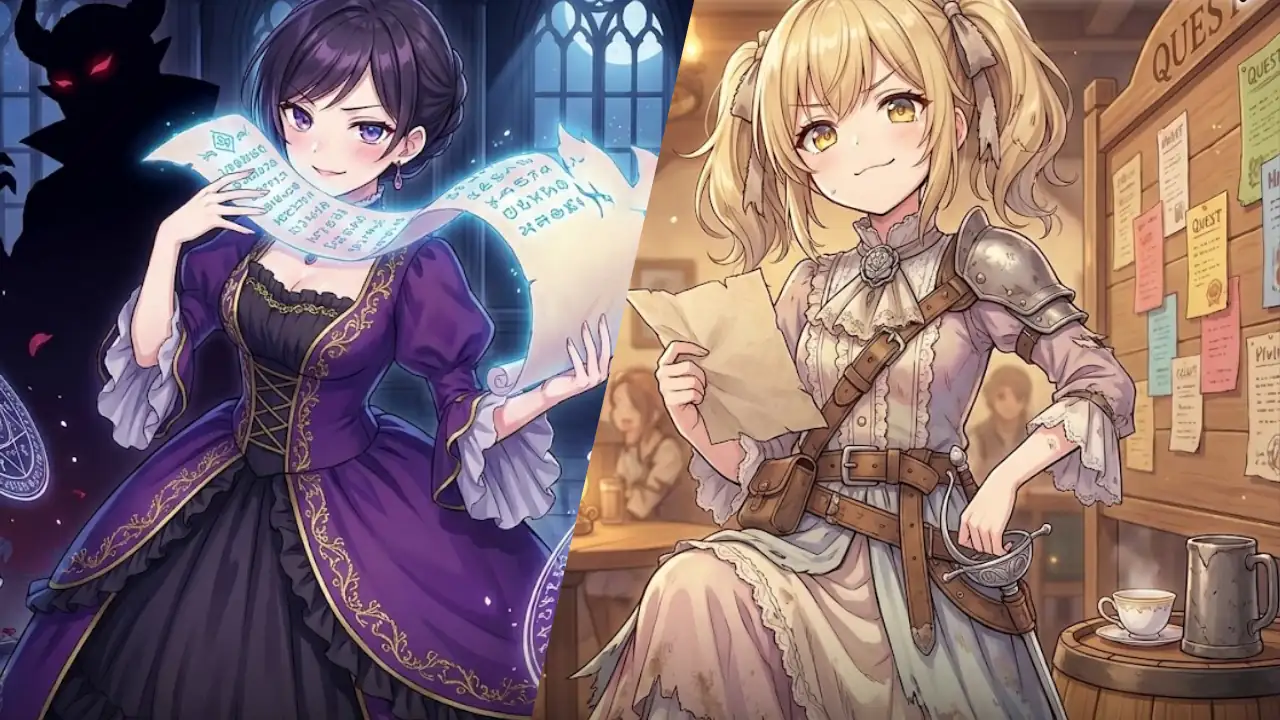
Everyone, have you ever generated an image with AI and felt something was missing? The quality is clearly high, but why does the image look somehow flat and boring?
The reason is very simple. It is because “Directing” is missing from the prompt.
So today, I have prepared the theme of “Villainess & Fantasy” to instantly captivate the reader’s attention. Here are prompt directing tips that reveal the character’s narrative at a glance.
1. Fallen Noble/Adventurer: Unbalance Creates the Story!
The first concept is a character who was of noble status but has fallen to the rough bottom. If you simply put noble, adventurer girl, or sword in the prompt here, you won’t get a protagonist with a backstory, just a vague feeling.
Plant a Sense of Incongruity
Attractive character illustrations come from a combination of things that don’t match. The reader’s gaze unconsciously flows in the order of [Character’s Eyes → Weapon → Outfit].
Dress her in a high-class dress with lace and ribbons, then equip her with rough leather boots and a worn-out belt. Then, wait? Combat boots with a dress? This incongruity becomes the character’s story.
Backgrounds Like a Stage Set
If you put too much effort into the background to show the world-building, the character gets buried. Blur the background boldly like out-of-focus photography. Instead, just leave one symbol that indicates where this is. This time, we will use the interior of an adventurer’s guild with wooden pillars.
[NRLayer Recommended Prompt] Adventurer Guild Ver.
This prompt is designed to maximize the contrast between the situation and the details. Copy and use it as is!
Light novel cover illustration of a fallen noble villainess adapting to rough adventurer life.
[Character]
Arrogant but determined expression, sharp eyes staring straight ahead, hastily tied back messy but elegant blonde hair. One hand clutching a crumpled quest request, the other resting on a rapier at her waist.
[Outfit]
Mix of a flashy but torn Victorian dress and rough adventurer gear, leather belt over silk, mud-splattered combat boots visible under a lace skirt.
[Atmosphere]
Noisy and dim adventurer guild tavern interior, warm ambient lighting, dust particles floating in the air (DoF).
[Detail]
A delicate porcelain teacup sitting on a wooden barrel next to a rusty iron beer mug.
--ar 2:3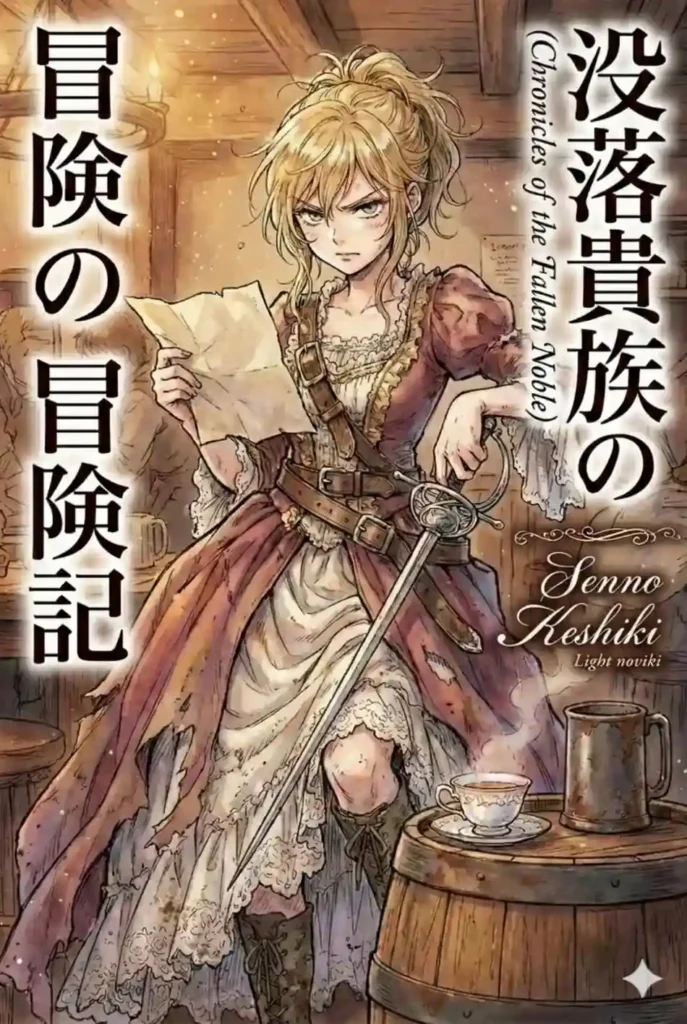
2. Mastermind/Politics: Dominate with Camera Angles!
The second type fights with power, not force. Usually, there is a partner who acts as the mastermind behind them, right? Even here, if you just write magic, two characters standing together, it just becomes a photo of a couple getting along. The intimidating presence of a mastermind comes from the Composition, not the expression.
NRLayer’s Tip: Use Low Angle
Make the reader look up at the character. This is called a low angle. And don’t place the partner character (mastermind) next to them, but place them like a shadow behind. That way, you intuitively feel, Ah, this character (mastermind) is the real owner!
Package Your Character
Web novel covers are small. Symbols are more important than realism. Covering the mouth with a fan, chin up, and looking down (Scornful look). If these three beats match, the product package called Villainess is completed in itself.
[NRLayer Recommended Prompt] Demon King Contract Ver.
This is a prompt that clearly specifies the relationship between the characters.
Dramatic fantasy novel cover illustration featuring a villainess and her demonic contractor.
[Character]
The villainess stands in the foreground, looking down at the viewer with a confident, cunning smirk and one eyebrow raised. She holds a glowing magical contract near her face. Behind her stands a tall, shadowy Demon King with horns, standing protectively, eyes glowing in the dark.
[Outfit]
She wears a deep purple and black ball gown with heavy gold jewelry and sharp accessories.
[Atmosphere]
Dark throne room with cold blue moonlight streaming through high gothic windows, floating magical symbols, low camera angle emphasizing dominance.
[Detail]
Broken glass chess pieces scattered on the marble floor reflecting the moonlight.
--ar 2:3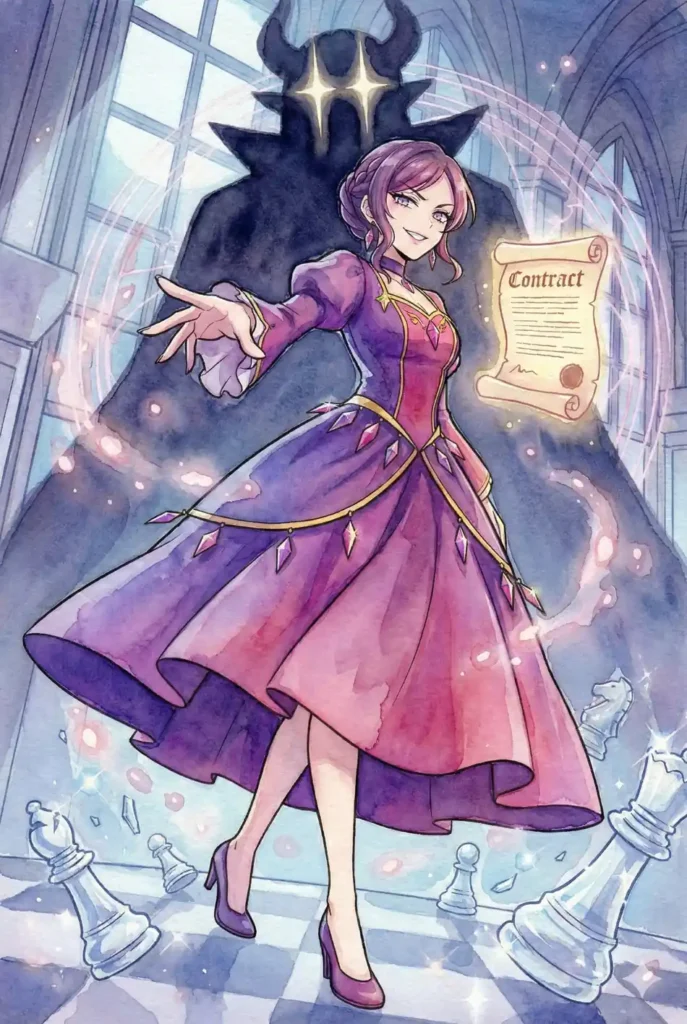
Conclusion: You Are the Director.
In the end, what matters is not “how beautifully you draw,” but “where to place the character and what to put in their hands.” That is “Intention” and “Directing.” Use the tips shared today to put your own charming characters on stage!